











4,9/5 reviews
Learning and development research for targeted growth
Learning and development determines how well employees can grow with what the organization needs. Yet learning in many organizations remains stuck in isolated trainings, training budgets or mandatory e-learnings.
With a Learning and Development survey from Deepler, you discover where employees want to grow, which skills are missing, how internal trainings are perceived and where learning gets stuck in practice. This way you make development not an HR activity on the side, but a focused part of performance, retention and organizational development.
- Discover what development needs employees really have
- Measure whether internal trainings align with the work
- Make learning concrete per team, role and growth phase
Learning and development: what does it mean for your organization?
Organizations invest heavily in training, but often have limited knowledge of what those investments return. Employees take trainings, managers encourage development and HR creates training policies, but the question remains: does the offering align with what people and teams need?
A survey on Learning and Development helps answer that question more clearly. You map where employees see opportunities, which skills are missing and how learning can be better linked to daily practice.
In this article we explain:
- What Learning and Development means within organizations
- Why internal trainings only become valuable when they align with work practice
- How to research employee development needs
- How Deepler helps make learning and development measurable
- What you do with the results to improve growth structurally
Table of contents
What is Learning and Development?
Learning and Development, often abbreviated as L&D, is about everything organizations do to develop knowledge, skills and behavior of employees. Think of internal trainings, coaching, trainings, leadership development, onboarding, technical training and workplace learning.
The meaning of Learning and Development lies not only in offering trainings, but especially in strategically strengthening what employees need to do their work better, smarter and with more confidence. An L&D survey shows whether the current offering aligns with practice and where employees need additional support.
From training to development
An internal training is often a visible part of L&D, but development also happens outside the classroom. Employees learn through feedback, collaboration, coaching, new responsibilities and solving real problems. This is precisely why it is important not only to ask which training someone wants to take, but also which skills are missing, where guidance is needed and what makes learning in practice easier or harder.
Why is Learning and Development important?
The speed at which work changes makes learning increasingly important. New systems, changing customer expectations, tight labor markets and growing complexity require employees who continue to develop.
At the same time, employees want to know they have a future within the organization. If development remains vague or is only available to a small group, frustration arises. A good L&D policy helps employees move forward and ensures the organization is better prepared for what’s to come.
A Learning and Development survey delivers various benefits to organizations
By making Learning and Development measurable, you see where growth is possible and where it gets stuck. This prevents training budgets from going into isolated initiatives that have little impact. You discover which teams need knowledge, where managers need more support and which development topics deserve priority.
1. Invest more strategically in trainings
With an L&D survey you prevent trainings from being chosen based on feeling or on the basis of who asks loudest for training. You see which skills employees are missing, which internal trainings are valued and where additional guidance is needed. This way you spend your budget more strategically and learning becomes better linked to organizational goals.
2. Better alignment between work and development
Trainings only work well when employees can apply what they’ve learned in their daily work. By measuring where that alignment is lacking, you discover whether trainings are too theoretical, don’t fit the role, or aren’t adequately followed up by managers. This makes development more practical and effective.
3. More ownership among employees
When employees are actively asked about their development needs, they feel taken more seriously in their growth. This increases the chance that they will take responsibility for learning themselves. Not because HR offers a training, but because it becomes clear what step will help them become better at their work.
4. Stronger leadership around development
Managers play a major role in Learning and Development. They determine whether employees get space to learn, receive feedback, and can practice new skills. With the right insights, you see which teams actively stimulate development and where managers need more tools.
5. Better talent retention
Employees who don’t experience growth prospects are quicker to look elsewhere. A well-structured L&D policy shows that the organization invests in future, craftsmanship, and career development. By measuring development needs in time, you can better retain talent and make growth more concrete.
Conduct your Learning and Development survey with Deepler
With Deepler you research how employees learn, what development needs exist and whether internal trainings actually align with practice. The questionnaire can be tailored around themes such as training offering, application at work, coaching, career development, leadership and access to development opportunities.
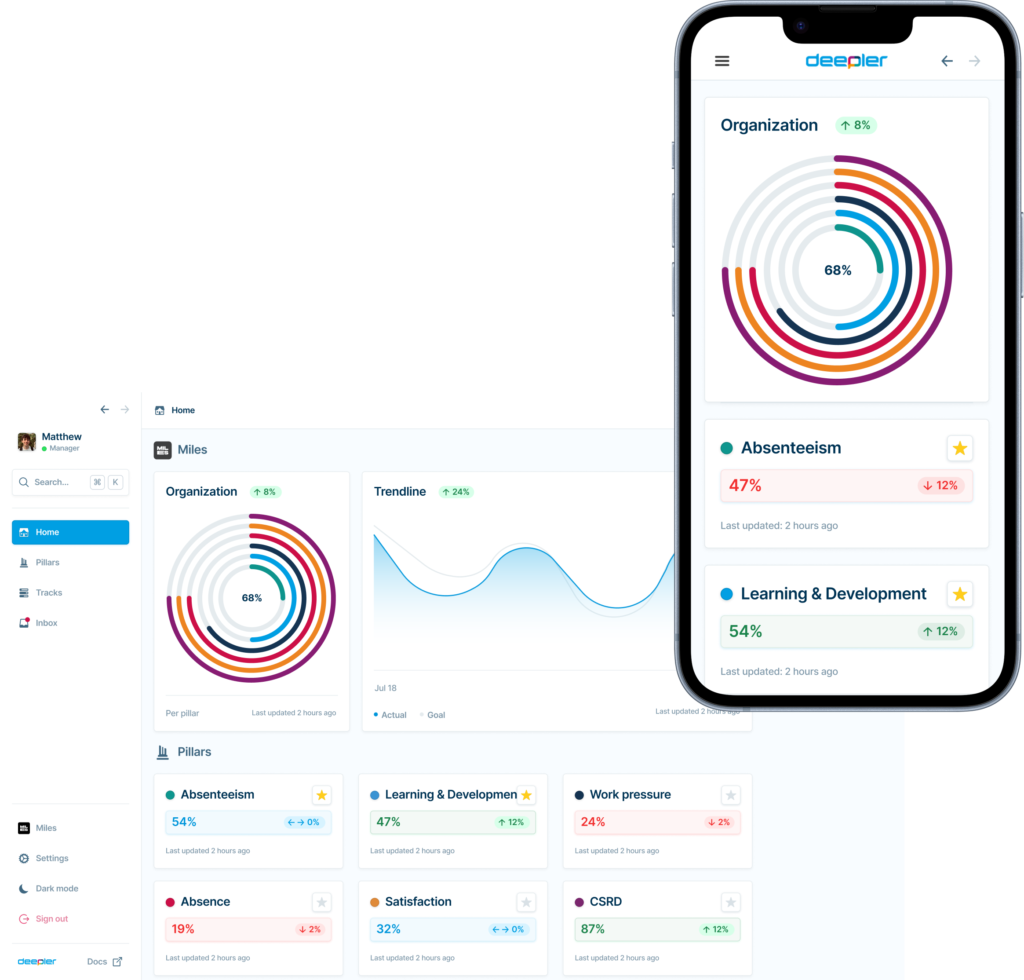
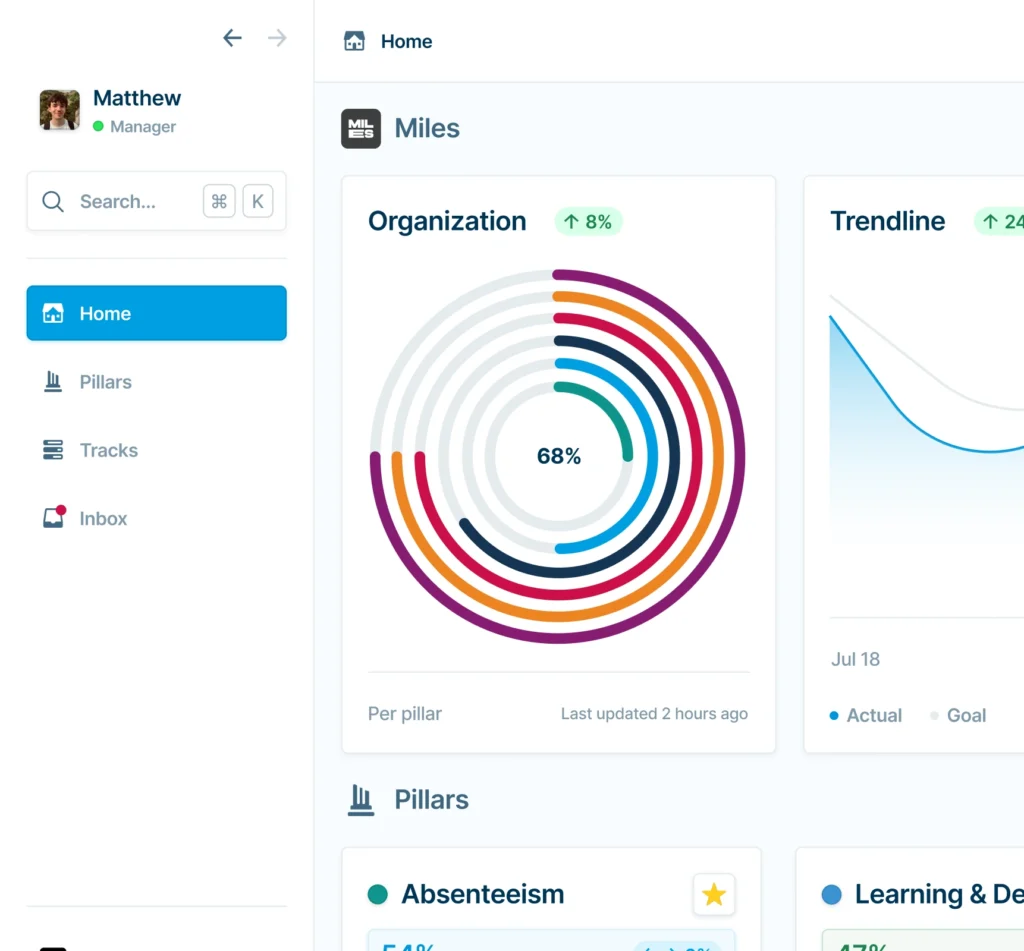
The results are displayed clearly in dashboards, so HR, management and leaders quickly see where the greatest development opportunities lie. You can compare results between teams, roles or locations and thus determine where general improvements are needed and where customization works better. This makes Learning and Development not an isolated training calendar, but a measurable improvement cycle.
Our satisfied customers
What are the benefits of Learning and Development?
Learning and Development delivers the most when it’s not approached as a cost center, but as a way to strengthen people and organizational capacity. A good survey shows what development is needed, where the current offering falls short, and how managers can better support learning. This creates a more realistic picture of the learning need within the organization.
A powerful tool
An L&D survey is especially powerful when you use it as part of a broader development cycle. First, you map out what employees and teams need.
Then you choose which internal trainings, courses, coaching, or learning interventions fit that need. Subsequently, you measure again whether the chosen approach has an effect. This creates a continuous movement in which learning is not separate from work, but directly linked to performance, job satisfaction, and future-proofing.
What are the benefits of Learning and Development?
Learning and Development delivers the most when it’s not approached as a cost center, but as a way to strengthen people and organizational capacity. A good survey shows what development is needed, where the current offering falls short, and how managers can better support learning. This creates a more realistic picture of the learning need within the organization.
Development needs in sharper focus
Many organizations have a training offering, but no complete picture of the demand behind it. Employees sign up for trainings that are well-known, while other development needs remain invisible. With Deepler, you map out what skills employees want to strengthen, where uncertainty lies, and what support teams need.
- Insight into individual and team-focused development needs
- Clarity on missing knowledge or skills
- Better prioritization of training budget and learning interventions
Make internal trainings more effective
Internal trainings are valuable when they are recognizable, applicable, and well-timed. If employees can’t use the content or don’t get space to practice it, the impact remains limited. By measuring how trainings are experienced, you see which programs work, which need to be sharpened, and where additional guidance is needed afterward.
Link growth to retention
Development is an important reason for employees to stay. Not because everyone wants a promotion, but because people want to feel they are making progress.
An L&D survey helps make growth prospects concrete. You discover where employees are missing opportunities, where career paths are unclear, and how learning can contribute to engagement and retention.
Trusted by small and large organizations
Ervaringen van klanten die met ons het verschil maken.
-
Larren
Recruitment Lead,
De Selectie
“Recently, I used Deepler to arrive at an EVP. Great what they were able to achieve in a short time! In a period of two weeks, we collected information and were able to continue with our AMC plan. In any other situation, it takes weeks, if not months, to get this done. Contact is good, friendly and constructive. Very nice club to work with.”
-

Douwe
Recruiter,
Securitas
“Ideal tool and company to gain more and better insight into the organization and employees as an organization! And especially with speed! For us, it was also the need to get tools for the topics of retention, to prevent future absenteeism or turnover. I also have experience with other parties and I sincerely value the speed of switching, follow-up and personal contact with Deepler. Absolutely recommended.”
-

Jolanda
HR Business Partner,
Nedcargo
“Deepler is a great tool for continuously collecting feedback from our employees. This input is then centrally available for us as management, but also for managers who benefit from it.”
-

Jonathan
Manager,
UWV
“What makes Deepler special is that it doesn’t get stuck in numbers. It helps you immediately understand where it is and what teams need. For us, this ensured that employees themselves came up with areas for improvement and took responsibility for them. The insights were sharp and useful, but most importantly: the conversation that started afterwards made the difference. Thanks to Deepler, we didn’t get a paper plan, but change that was supported by the people themselves.”
-
Amadeus
COO,
OSRE
“The software has a positive impact on us as a rapidly growing organization. By better understanding what is going on in the workplace and what people offer as solutions for improvements, we can make more effective decisions. The platform helps us to gain real-time insight and to respond directly to it via the tool.”

Is Learning and Development mandatory and what about training policy?
A Learning and Development survey is usually not legally required. However, organizations in many functions have a responsibility to adequately equip employees for their work.
Think of safety, professional competence, compliance, changing systems, or professional standards. Additionally, employees increasingly expect their employer to invest in development. An L&D survey helps make that responsibility concrete.
You not only map out which trainings are offered, but also whether employees actually experience access, time, and guidance to learn. This makes training policy less abstract. You can better justify where budget goes, which groups need extra attention, and how development contributes to organizational growth.
Is a Learning and Development survey anonymous?
Yes, an L&D survey is preferably conducted anonymously. Employees should be able to honestly indicate where they experience development needs, which trainings don’t fit, and whether they receive sufficient support from their manager.
Especially when it comes to career prospects, uncertainty about skills, or lack of guidance, anonymity is important. Deepler reports results at group level, so patterns become visible without individual employees being identifiable.
What about GDPR and privacy in an L&D survey?
In a Learning and Development survey, you process feedback from employees. Therefore, privacy, purpose limitation, and reporting must be handled carefully. The main principles are:
- Only request information necessary for improving learning and development
- Clearly communicate in advance why the survey is being conducted
- Report results at group level and prevent re-identification
- Handle open answers carefully, especially in small teams
- Explain who has access to the results and how follow-up will take place
This keeps the survey safe, reliable, and useful.
What is the role of HR, management, and managers?
HR can use the L&D survey to better support training policy, internal training, and development programs. Management gains insight into what skills are needed for the organization’s future. Managers then play a key role in follow-up, because development mainly takes place on the work floor.
- HR translates outcomes into policy and offerings
- Managers discuss what teams need to perform better
- Managers create time, space, and feedback moments
- Employees take ownership of their own development
Why do many organizations still conduct an L&D survey?
Organizations conduct an L&D survey because development is often considered important, but not always managed clearly. There is budget, there are trainings, and there is good intention, but little visibility into impact.
By surveying employees, you discover where learning adds value and where the offering doesn’t fit. That helps you make choices, set priorities, and make development policy less non-binding.
Get more out of Learning and Development
Start with work practice
Don’t just ask what training employees want to take, but especially what they need to do their work better. Then development aligns with real situations instead of a general training catalog.
Involve managers early
Managers often determine whether employees get time, feedback, and space to learn. Involve them early in interpreting the results, so follow-up doesn’t rest solely with HR.
Also measure application afterward
A training is only valuable when employees use what they’ve learned. Therefore, measure not just satisfaction with training, but also whether employees apply new knowledge and where that still falls short.
Do’s of Learning and Development
If you want to seriously improve Learning and Development, make it concrete and close to the work. A good survey helps you have the right conversations and make decisions.
- Link learning needs to roles, teams, and organizational goals
- Ask about application of internal training in work
- Discuss results with managers and teams
- Make development actions small, achievable, and trackable
- Regularly measure whether learning has an impact
Don’ts of Learning and Development
- Only steer based on the number of trainings completed
- Offer training without knowing what need is behind it
- Put development entirely with HR
- Don’t make time to apply what was learned
- Ask employees for feedback and then provide no follow-up
What do you do with the results of an L&D survey?
The value of a Learning and Development survey lies not in the report, but in what you do with it. The results show where employees experience room for growth, where skills are lacking, and where internal training needs better alignment.
Use those insights to have conversations with HR, management, leaders, and teams. Then don’t immediately opt for a large training calendar, but first determine which development topics will have the most impact.
Sometimes training is needed, but sometimes coaching, better mentoring, role clarity, or more practice time works better. By following up on the results step by step, you make learning concrete and measurable.
From insight to impact
The step from research results to actual improvement requires a well-thought-out approach. Start by prioritizing the most important development needs and convert these into concrete learning trajectories that match the needs of teams and individuals. This prevents you from wasting resources on generic trainings that don’t land where they’re needed.
Success is created by regularly engaging in dialogue with managers and employees about their development wishes, and by making progress visible. This not only strengthens the learning culture in your organization, but also ensures that L&D investments actually contribute to better performance and employee engagement. We have worked out 6 follow-up steps for you:
Wil je nog meer tips over hoe je een medewerkerstevredenheidsonderzoek (MTO) effectief op kan volgen? Lees dan ons artikel:
MTO Effectief Opvolgen: Waarom Is Dat Belangrijk?
1. Analyze development needs per team and role
Don’t just look at the average. Differences between departments, functions, or experience levels often reveal where specific support is needed. This prevents everyone from receiving the same training when needs differ.
2. Determine which skills are a priority
Not every development need has to be addressed immediately. Choose the skills that contribute most to organizational goals, work quality, customer value, or sustainable employability. That makes L&D more strategic.
3. Discuss outcomes with managers
Managers can translate the results into practice. They know where work is changing, where employees get stuck, and where guidance is needed. Use their input to make interventions more realistic.
4. Choose appropriate learning interventions
Internal training is not always the best solution. Also consider coaching, peer consultation, buddy systems, practical assignments, feedback sessions, or knowledge sharing between teams. Choose the format that fits the need.
5. Make application part of the plan
Determine how employees will use what they’ve learned. Plan practice moments, discuss progress and give managers a role in feedback. Otherwise, learning will quickly become disconnected from work.
6. Measure again and adjust
Investigate over time whether employees experience more clarity, skill and confidence. This shows you whether L&D is working and where adjustments are needed. That makes development an ongoing process.
Make learning visible with insights into development needs
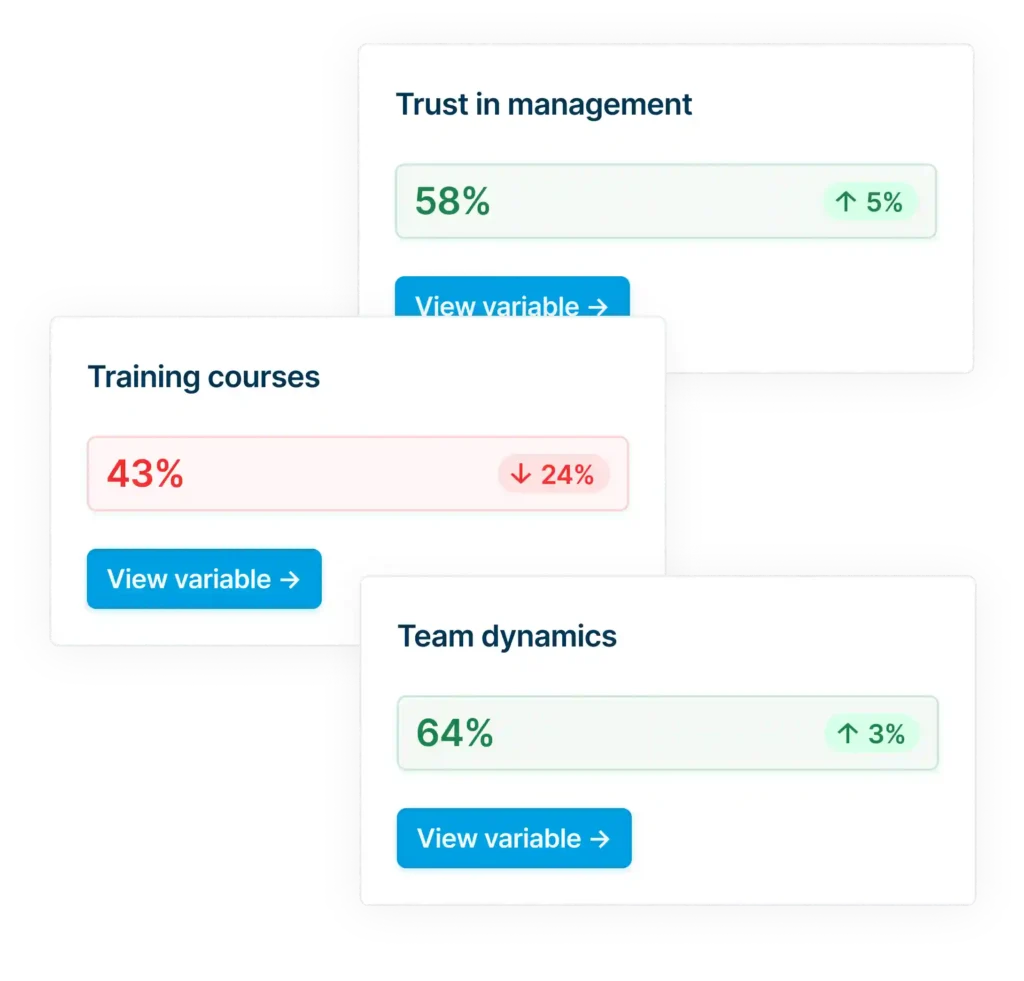
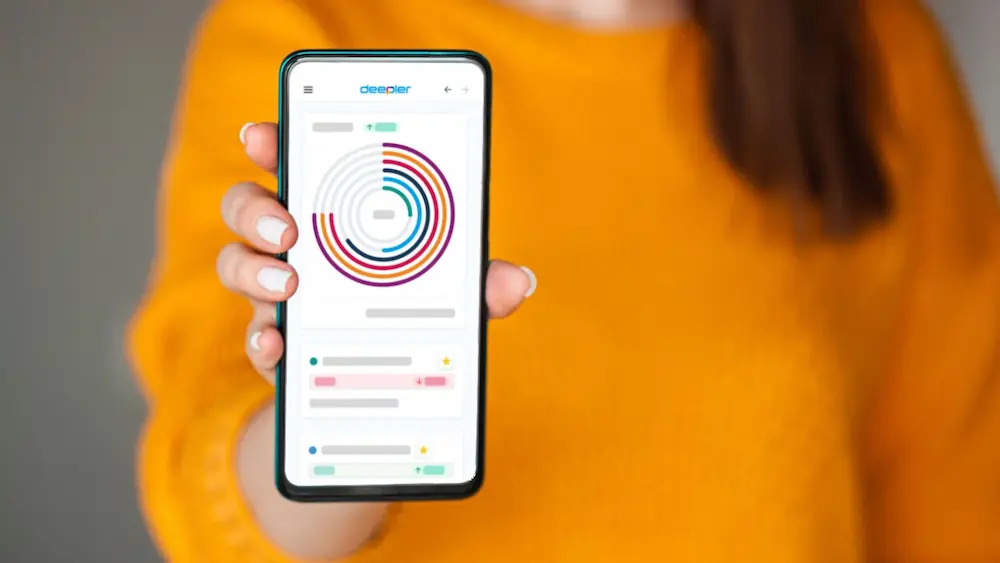
With the Deepler dashboard you see where development needs arise, which internal training programs align well and where employees need more guidance. The insights help HR and managers make targeted choices, without falling into loose trainings or generic training plans.
Organizational research without high costs
Stem je wensen af met ons Basic- of Plus-pakket. Wil je meerdere landen of organisaties vergelijken? Dan is het Enterprise-pakket de beste keuze.
Basic
€2.99
Per user/per month
The best for your team or smaller organizations that want to gain insights quickly.
- Maximum of 1 module
- Score segmentation
- In-depth analysis for Managers
- Unlimited number of languages
- Personal dashboard for employees
Plus
€3.49
Per user/per month
The best option if you want to survey multiple teams and SMEs.
- Everything from Basic
- 2 additional research modules
- Personal success manager
- Non-desk employees
- Custom questions
Most popular
Enterprise
On request
Per user/per month
The best for large organizations and custom modules.
- Everything from Plus
- Single Sign-On
- Custom modules
- Advanced Security
- Personal onboarding
Basic
€36
Per user/per year
The best for your team or smaller organizations that want to gain insights quickly.
- Maximum of 1 module
- Score segmentation
- In-depth analysis for Managers
- Unlimited number of languages
- Personal dashboard for employees
- Suitable for employees company email address
Plus
€42
Per user/per year
The best option if you want to survey multiple teams and SMEs.
- Basic
- 2 additional research modules
- Personal support from a Deepler expert
- Suitable for all employees
- Add your own questions
- Option to conduct surveys using QR codes
Most popular
Enterprise
On request
Per user/per year
The best for large organizations and custom modules.
- Plus
- Unlimited research modules
- Custom modules
- Unlimited number of languages
- Personal dashboard for employees
- Suitable for employees company email address
Frequently asked questions
What is Learning and Development?
Learning and Development is the full range of activities through which organizations help employees develop knowledge, skills and behavior. This includes trainings, internal courses, coaching, feedback, career development and on-the-job learning. The goal is that employees improve in their work and can grow with the organization.
What does Learning and Development mean in practice?
In practice, Learning and Development means linking learning to daily work. It’s not just about training offerings, but about what development employees need to perform their role well. Think of professional knowledge, digital skills, collaboration, leadership or personal effectiveness.
How often should you conduct an L&D survey?
That depends on how quickly the organization is changing. Many organizations measure annually or twice a year how employees experience development. With major changes, new systems or reorganizations, it may be wise to measure more frequently in short intervals, so you can adjust faster.
Is an L&D survey anonymous?
Yes, anonymity helps employees respond honestly. They should be able to indicate where they lack guidance, which training programs are insufficient, and where they experience uncertainty. Deepler reports at group level, so the organization sees patterns without making individual responses unnecessarily visible.
What topics do you measure in a Learning and Development survey?
You can measure themes such as internal training, training needs, coaching, feedback, career development, application of training, role clarity, leadership and access to development opportunities. The right themes depend on your organization, target group and development ambitions.
What is the difference between Learning and Development and internal training?
Internal training is one part of Learning and Development. L&D is broader and also covers coaching, learning on the work floor, feedback, career paths and developing behavior. An organization can have lots of internal training but still experience little effective development.
How many employees should participate in an L&D survey?
The more employees participate, the more reliable the picture becomes. What is especially important is that there is sufficient response per team or target group to see patterns. With small groups, you should be careful with anonymity and not break down results too detailed.
How long does a Learning and Development survey take?
A targeted L&D survey can often be set up, deployed and analyzed within a few weeks. The lead time depends on the number of employees, the desired segmentation and the extent to which you use open questions. With Deepler, results can quickly become visible in dashboards.
What do you do after an L&D survey?
After the survey, you discuss the key insights with HR, management and supervisors. Then you prioritize development topics, determine appropriate learning interventions and make agreements about application in practice. Subsequently, you measure whether employees actually experience progress.
What does a Learning and Development survey cost?
The costs depend on the size of the organization, the desired package and the level of support. Deepler works with scalable packages, so you can start small or integrate Learning and Development structurally into your broader organizational survey.
What questions do you ask in an L&D survey?
Good questions address development needs, accessibility of internal training, applicability of trainings, support from supervisors and career prospects. For example: “I get sufficient opportunities to develop myself” or “The training I receive helps me in my daily work.”
How do you ensure reliable answers?
Ensure clear communication, anonymity and a short questionnaire. Explain why the research is being conducted and what will happen with the results. Share the key insights and actions afterwards, so employees notice that their feedback is taken seriously.
Can Deepler help improve internal training?
Yes. Deepler helps make it clear which internal trainings are a good fit, where employees have additional needs and which learning interventions could be more effective. This allows you to improve training policy based on data, instead of only post-evaluations or isolated feedback.
Schedule a consultation
Klaar om stappen te zetten? Laat van je horen, dan kijken we samen naar de beste aanpak. Of je nu een vraag hebt of gewoon even wilt sparren, we zijn er voor je.
- Een inkijkje in het dashboard van Deepler
- Persoonlijk advies en start met eerlijk inzicht
- Een vrijblijvend gesprek voor al jouw vragen